The man behind the official treatment guidelines on acid control admits today: “We got it wrong.”
15 years ago, Professor Kenneth De Vault co-wrote the official treatment guidelines on acid control. Today, he explains in his book why he now considers many of those guidelines a mistake, and why millions of people, despite treatment and “normal” results, still suffer from heartburn, regurgitation and sleepless nights. Most importantly, he shows what people can do differently today.

16 July 2026

Burning that climbs up your throat every night, no matter how carefully you eat.
A sour taste in your mouth when you wake up.
Antacids in every pocket, in every bag, in the glove box of your car.
Nights so broken by the burning that you wake up exhausted.
Does that sound familiar?
Then you are like tens of millions of other Americans living with acid reflux.
People who hear from their doctor again and again: “Your endoscopy shows nothing.”
People who dutifully take their pill and still feel bad every single day.
People who end up believing that this is just how it is.
And who don’t know that everything their doctors have told them for years rests on one big mistake.
My name is David Marsh. I’m 54 and I’m a journalist.
For over 30 years, I’ve investigated stories for American magazines and newspapers.
I’ve exposed pharmaceutical scandals and brought corrupt politicians to light.
I humbly like to think I’m good at what I do.
And yet the biggest story of my life, I missed for 20 years, even though it was right under my nose.
The story of a condition I had myself.
One I went to work with every day, without really understanding it.
A condition that nearly cost me my job, my marriage and my self-confidence.
It’s the story of my own acid reflux.
And it began 20 years ago.
Back then, I was 34.
I was lean, I had energy to spare, and I had just been promoted.
My life looked like a dream.
Until, within a single month, everything changed.
Suddenly there was a burning in my chest after dinner.
Then a sour taste in my mouth when I woke up.
At first I put it down to something I’d eaten.
Then to stress at work.
But I hadn’t changed anything about how I ate.
And when, after three months, the burning had started waking me at night, I went to my family doctor.
He ran his tests.
Three days later I was back in his office.
He looked at the results, then at me, and said:
“Mr. Marsh, you have acid reflux. But don’t worry – it’s nothing serious. In four weeks you won’t feel a thing.”
I was relieved.
And for the first few months, I really did feel better.
I took my PPI every morning, the burning faded, my doctor beamed at every appointment, and I was relieved.
But then the symptoms came back. Little by little. Worse than before.
First it was the nights.
The burning would wake me at 2 a.m., and I’d lie there, my mind racing, going over everything I’d eaten that day, trying to work out what had set it off.
Night after night, I got four hours of sleep. Maybe five.
And the exhaustion that followed wasn’t the normal “I had a long day” tiredness.
It was exhaustion that seeps into your bones.

I remember exactly the morning I first understood that something was wrong.
I woke up with my mouth full of acid. Sour. Bitter. Burning.
I always kissed my wife good morning.
That morning, I couldn’t.
I had to run to the bathroom to spit.
I stood at the sink, staring at myself in the mirror, wondering what was happening to my body.
And then there was the food.
The list of things I could eat without paying for it kept getting shorter.
First coffee. Then tomato sauce. Then wine. Then any dinner after seven.
I stopped saying yes to dinners with friends. I was tired of explaining why I wasn’t eating.
Then my doctor doubled my dose.
I carried antacids everywhere – my jacket, my briefcase, the glove box of my car.
And still, the burning came back.
And the worst part:
At the office, colleagues with the same diagnosis.
Reflux. The same pills. And still enjoying their lunch.
Not me.
I was awake at three in the morning, the burning in my chest, my thoughts spinning at full speed, then I dragged myself out of bed at seven, dead tired.
At work it got worse and worse, too.
Me – the man who had been known for years for his razor-sharp investigations – suddenly needed three attempts to write a single paragraph.
My editor once said carefully: “You seem so… absent lately.”
Three months later, the unthinkable happened:
I missed a deadline. For the first time in 25 years of career.
My editor said nothing.
But from that day on, the big stories went to other colleagues.
Meanwhile, I sat in my office, staring out the window, wondering at what exact moment I had stopped being myself.
At what exact moment had I started accepting this life as normal?

20 years…
For 20 years, I dutifully took my pills.
For 20 years, I believed every doctor who said that my endoscopy “showed nothing.”
For 20 years, I convinced myself that it had to be this way – that it was age, stress, my diet.
And for 20 years, I missed what was right under my nose.
Until a year ago.
When my editor put the last investigation of my life on my desk and, without knowing it, changed my life.

Because what I didn’t know back then was this:
Acid reflux seems harmless.
But it isn’t.
Because your digestive system is not just a tube that digests your lunch. It plays a part in almost everything about how you feel.
It influences your energy.
It influences your sleep.
It influences your mood.
It influences how well you absorb food and how inflamed your body gets.
If your gut suffers, your whole body suffers.
And that is exactly where the problem lies that almost no doctor explains to their patients:
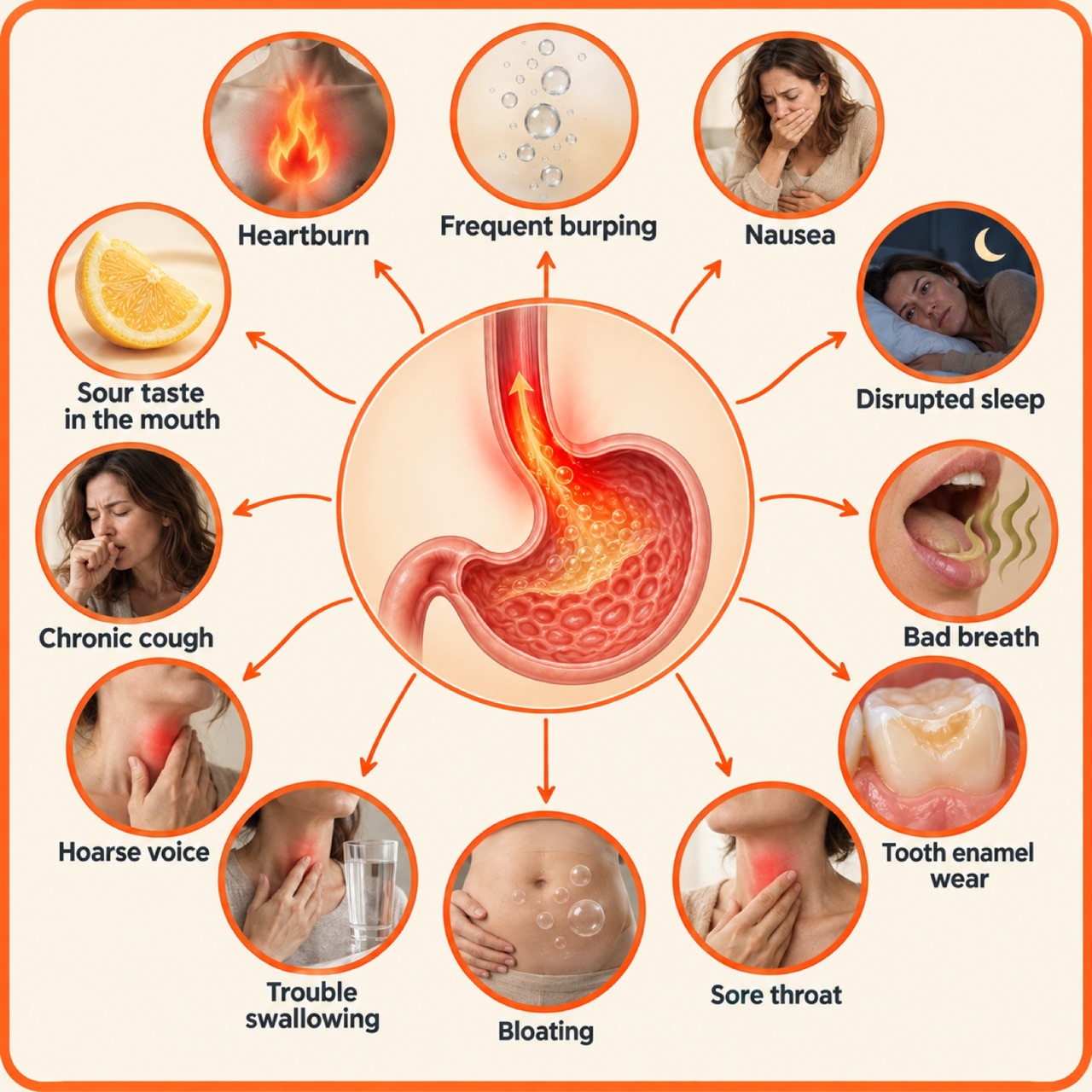
Almost ALL your symptoms ultimately come from one place: the lining of your esophagus and gut.
And I’m not just talking about heartburn.
I’m talking about:
- A sore throat and a nagging cough that feel like a cold or an allergy – because the irritation doesn’t stop at your chest
- Exhaustion – because acid keeps irritating the lining of your digestive tract all night, so the digestive system that should be resting while you sleep never does – and neither do you
- Aches in your muscles and bones that feel like rheumatism – even though you don’t have it – because a struggling gut can’t absorb the calcium and magnesium your body needs
- Hair loss and brittle nails – because your body isn’t absorbing the nutrients your hair and nails depend on
- Brain fog, trouble concentrating and forgetfulness – because a struggling gut and years of acid blockers can leave your body short of nutrients like B12
- Low mood – because your gut makes about 90% of your body’s serotonin, the “happy hormone”, and a worn-down gut lining throws that off
- High blood pressure – a large study of over 64,000 women linked acid reflux medication to a higher risk
- Even type 2 diabetes – large studies have linked 2+ years of daily acid blockers to a higher risk
Yes, you read that right.
All of these can be the consequence of a gut lining that has been worn down for years.
But most doctors treat them as separate problems.
Allergy pills from one doctor.
Sleeping pills from the next.
Painkillers for the aches from a third.
Blood pressure pills from a fourth.
And always a higher dose of the PPI on top.
That’s exactly what happened to me for 20 years.
And it is exactly what is happening right now to millions of people in America.
It was only when I understood that everything was connected that I could finally change something.
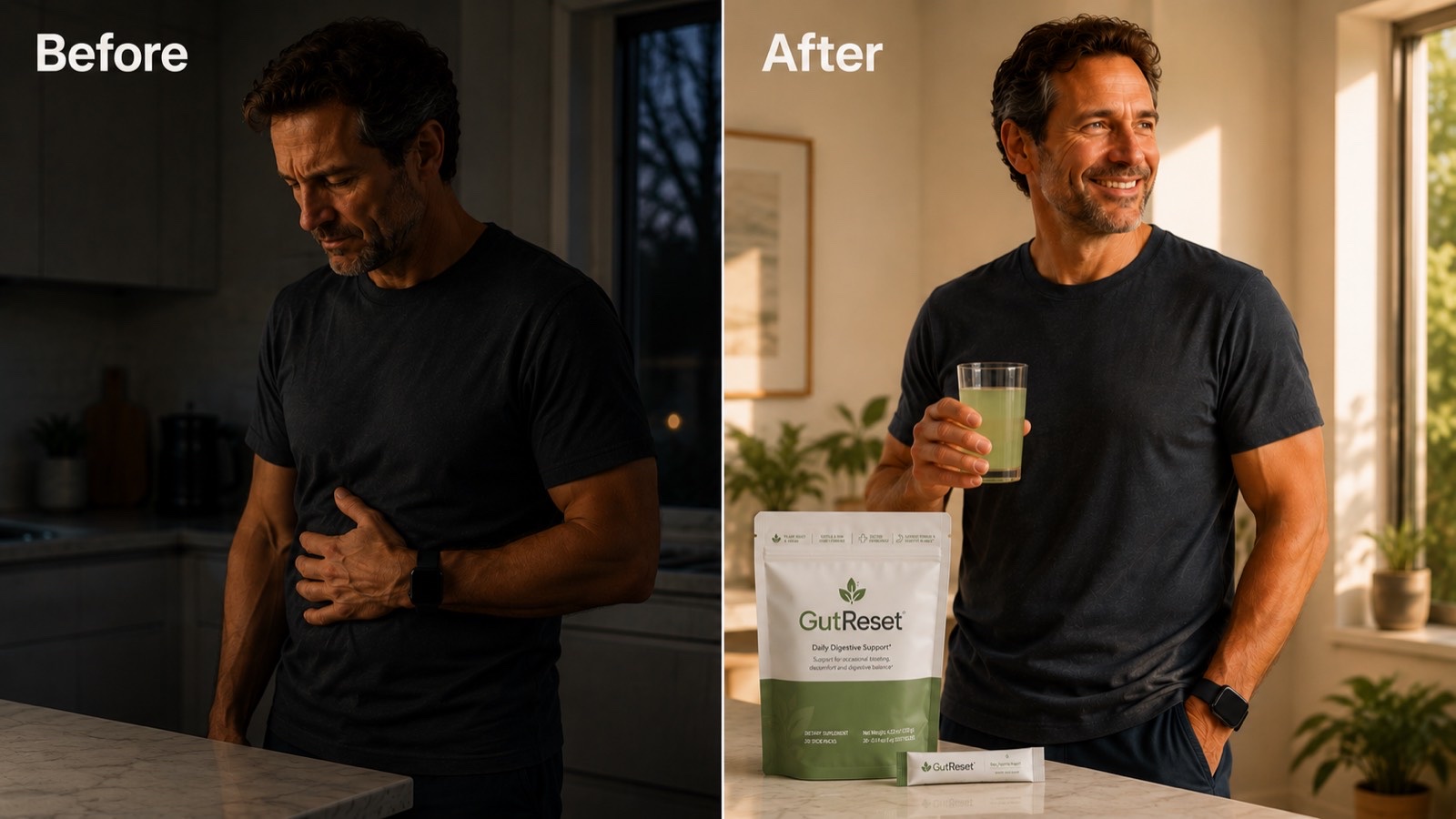
Today, a year later, my life is barely recognizable:
I wake up in the morning without an alarm.
I sleep through the night for the first time in years.
I can eat tomato sauce again. I can even have a glass of wine with dinner.
I kiss my wife good morning again.
My hair is thick again.
My blood pressure is back in the normal range for the first time in ten years.
And the craziest part:
I take a lower dose of my PPI today than I did a year ago.
Much lower.
How did I do it?
By no longer blindly trusting my family doctor and starting to do what I’ve been trained for my whole professional life:
Investigate.
What I discovered first shocked me, then made me angry, and in the end changed my life.
In this article, I share everything with you.
In this account, you will learn:
- ✔ why the professor who co-wrote the official treatment guidelines on acid control is today publicly against exactly that treatment.
- ✔ why you will never really feel better despite your daily pill if you keep going the way you are.
- ✔ why acid blockers and antacids can lead to side effects like palpitations, and why you end up needing higher doses with even stronger side effects.
- ✔ which overlooked part of your gut is quietly making sure your pills go up in smoke.
- ✔ how, with two simple but decisive steps, you can finally break out of the vicious circle and get your quality of life back.
Sometimes in life, there’s a single moment that changes everything.
Maybe this article is your moment.
The moment you finally understand why your pills haven’t helped you for years, and what you really need to do to finally feel better.
If no one has really been able to help you so far, then please stay with me now.
Because what I’m about to tell you changed my life.
And it may well change yours too.
It was a Tuesday morning last July when my editor called me into his office.
I knew that look.
I’d seen it often enough on colleagues who then packed up their boxes.
“David, I have to be honest. These last six months have been difficult. We have to cut positions, and you’re on the list.”
25 years of career. Over.
I sat there, unable to even answer.
Then he pushed a folder across the table.
“But I’m giving you one last chance. We need a big cover story. Acid reflux – tens of millions of Americans affected. A professor has just published a book that questions everything we thought we knew about how it’s treated. Nobody here has written about it yet. You have eight weeks.”
My heart skipped.
Acid reflux.
My condition.
The condition I had lived with for 20 years and, until today, had never really understood.
At home, I closed the door of my study, switched off my phone and opened the folder.
Inside: a few printouts.
A book recommendation.
And the name of a man I had never heard of.
Kenneth De Vault.
What I learned about him over the next few hours kept me from sleeping.
Because this man was not just any professor.
He was one of the people who co-wrote the official standard treatment for acid reflux.
The exact treatment my family doctor had been using on me for years.
The exact treatment that nearly everyone with reflux in America gets today.
And this very man was now saying publicly:
“We got it wrong.”
What is the standard treatment?
The standard treatment is the official guideline by which almost every reflux patient in America is treated today.
Every family doctor. Every gastroenterologist. Every clinic.
Tens of millions of people in this country are treated according to that guideline.
And that guideline, Professor Kenneth De Vault co-wrote.
And today, he says himself: it is wrong.
That means: tens of millions of people are right now being treated by a system that even its own co-author calls a failure.
Professor Kenneth De Vault is one of the most influential gastroenterologists in the world.
A professor at one of America’s leading medical centers.
For years, president of the largest digestive health association in the country.
Recipient of the highest distinction a researcher in his field can receive.
And the man who, 15 years ago, co-wrote the official treatment guidelines, the very guidelines by which every doctor today treats their reflux patients.
And that very man has published a book.
What Kenneth De Vault admits in it stunned me.
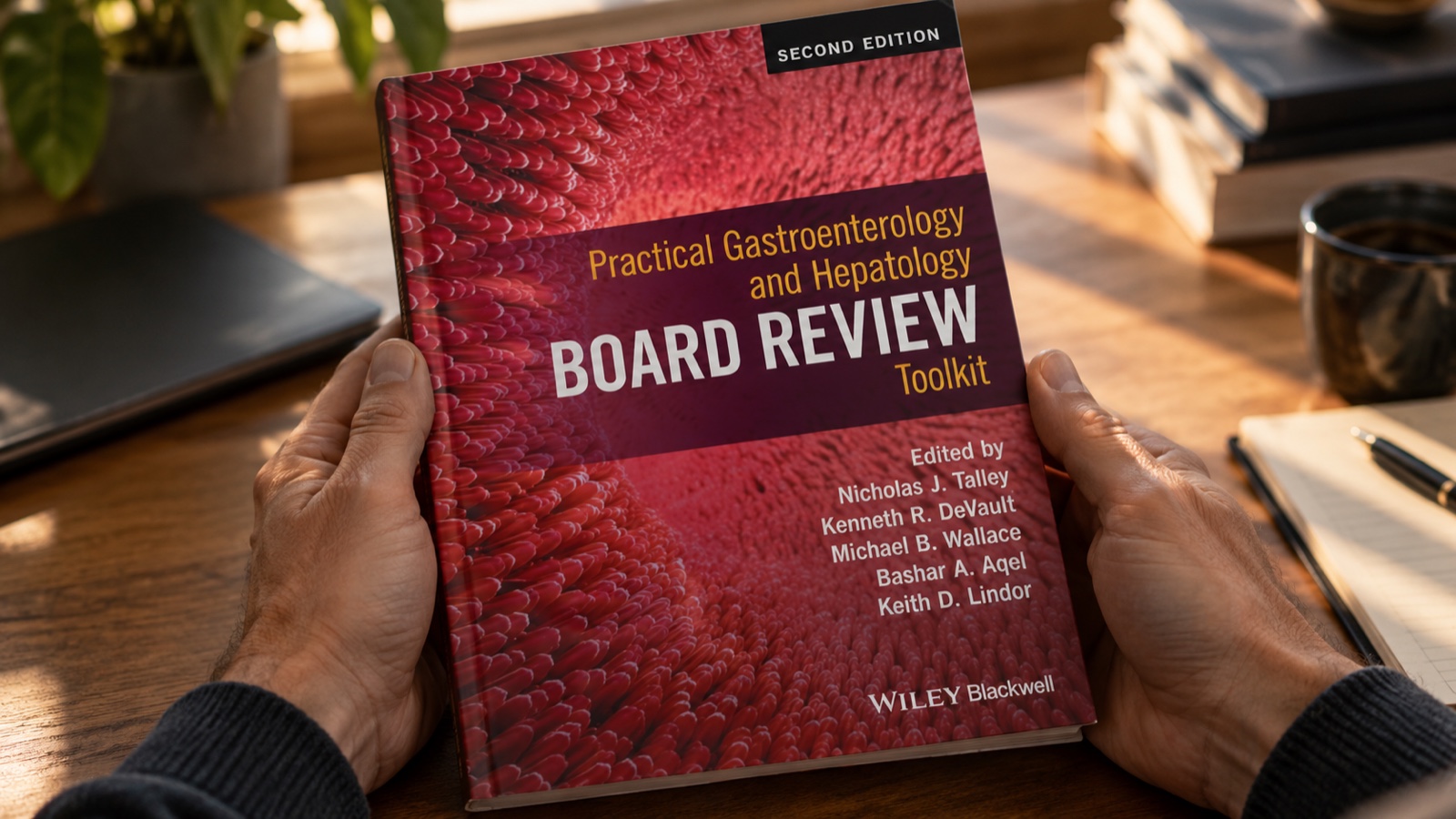
For decades, Kenneth De Vault was firmly convinced:
If a patient takes a PPI, their reflux is under control. Period.
That’s what he had learned at university, and what he himself had written into the official guidelines.
Then something happened that changed everything.
Kenneth De Vault admitted that he had been wrong all his life.
That PPIs alone are not enough.
That millions of people, despite their pills, keep suffering, and precisely because of their gut.
In his book, he writes:
“For years I told my patients that their symptoms had nothing to do with their gut. Today I know I was wrong.”
And:
“The rules I co-wrote are failing millions of patients.”
Let that digest for a moment.
The man who made the rules now says himself: those rules are wrong.
I sat at my desk, staring at the screen, struggling to believe it.
Because in his book, Kenneth De Vault explains exactly WHY he was wrong.
And that is exactly what I’m summarizing for you now.
Because what Kenneth De Vault writes there explains for the first time why, for those of us with reflux, things don’t get better despite the pills.
What follows are the 3 most important minutes of this entire article.
If you understand this, you will understand for the first time in your life what is really going on in your body.
You will understand why your pills don’t work.
Why your results still look “normal”.
And above all: what you need to do to finally feel better again.
I promise you: no doctor has explained this to you yet.
And I’m trying to make it so simple that you’ll never forget it.
Gastric Acid, Pepsin and Bile – That’s the Big Mistake
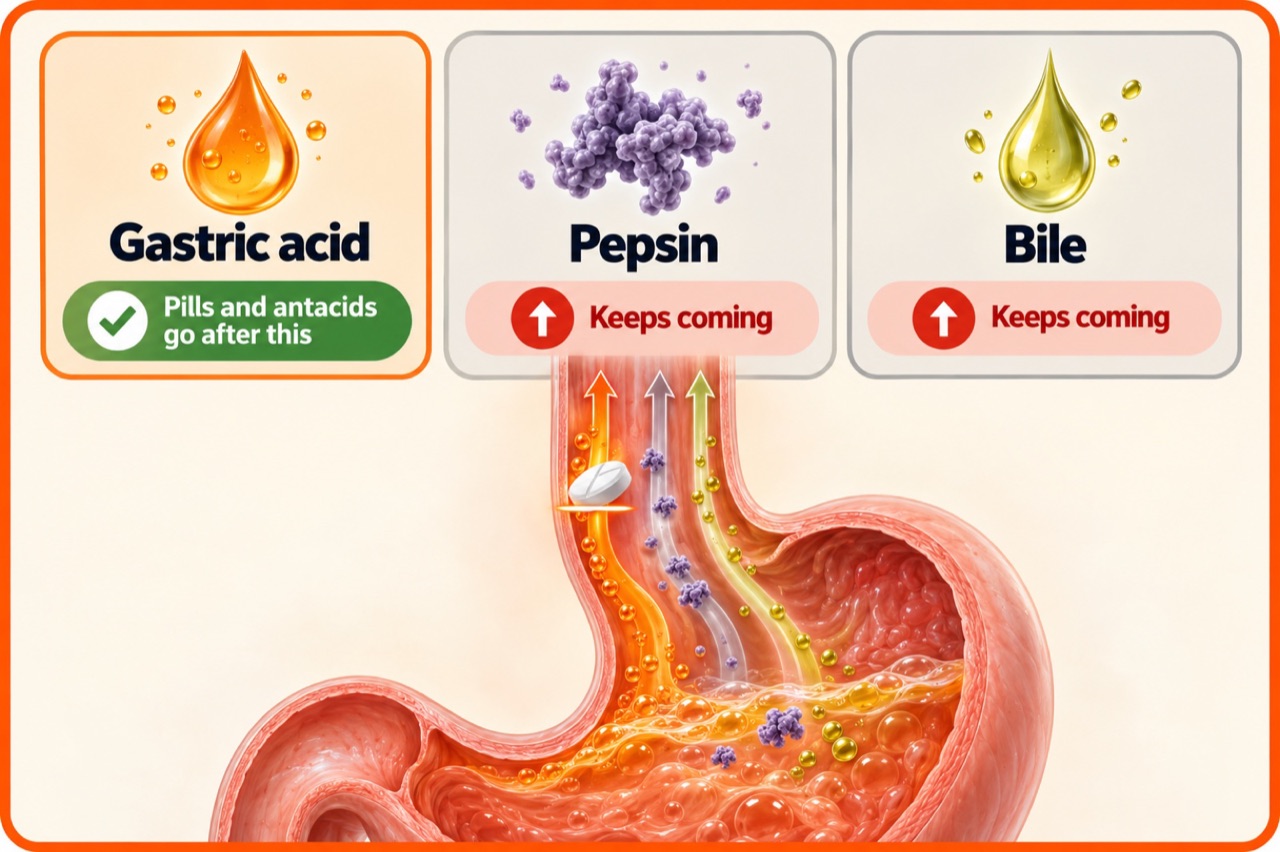
Every time you eat, your body releases three things to digest your food:
- Gastric acid. This is what people simply call “acid”. It softens your food.
- Pepsin. A powerful enzyme that digests meat and other protein.
- Bile. It works like a detergent: it breaks up fat so your body can digest it.
And now, hold on tight:
The pill you swallow every morning, your PPI, reduces how much gastric acid your stomach makes.
Your antacids neutralize the gastric acid that’s already there.
Both go after only one of the three.
The pepsin and the bile keep coming.
So where do the pepsin and bile end up?
On the lining of your esophagus.
And that is exactly where the problem appears.
Dilated Intercellular Spaces
Now comes the point that changes everything.
The sentence I hadn’t heard from a single doctor in 20 years.
Are you ready?
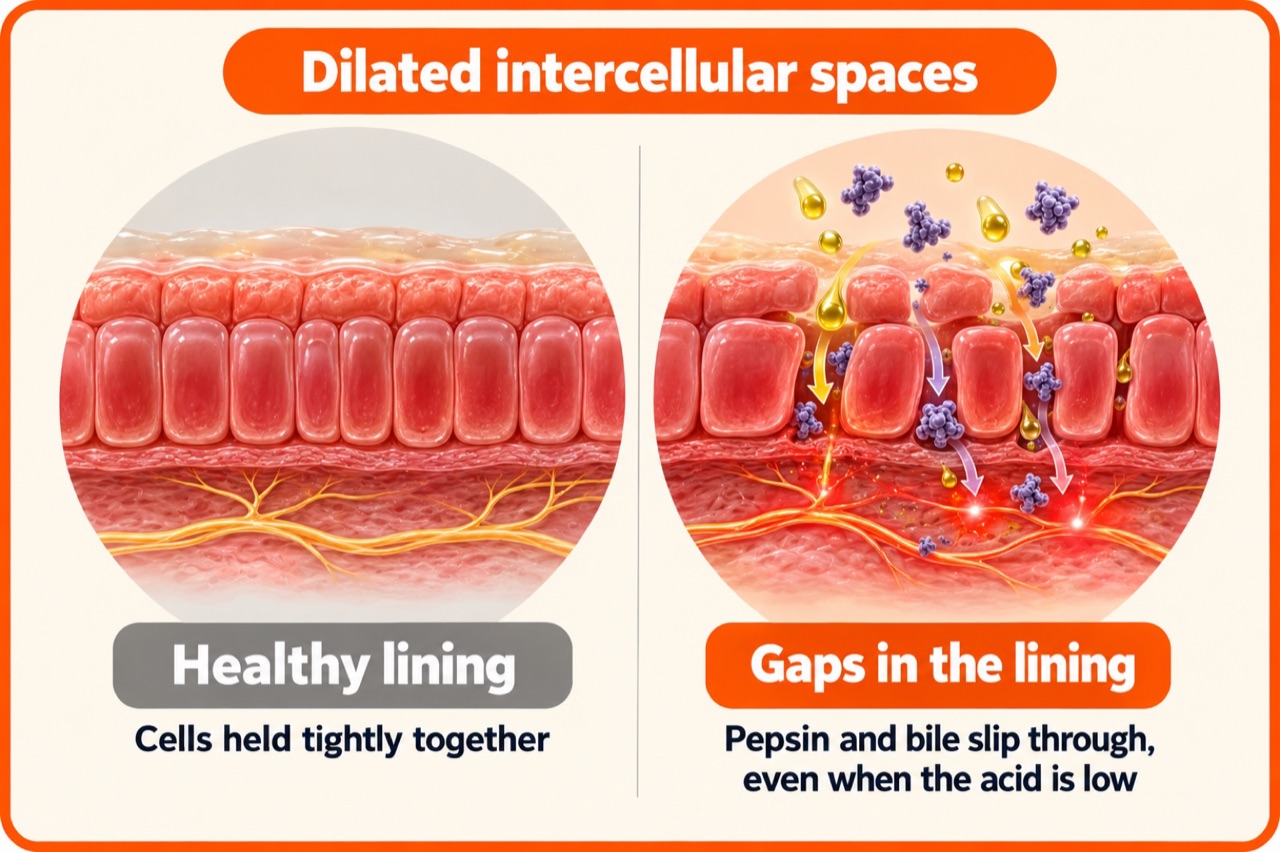
The inside of your esophagus is covered by a lining. Think of it as a wall of cells, like bricks, held tightly together.
In many people with chronic reflux, those cells are no longer held tightly. Gaps open up between them.
Gastric acid, pepsin and bile wear away at the seals, day after day.
In medical terms, this is called dilated intercellular spaces.
And Kenneth De Vault writes very clearly in his book:
If those gaps stay open, even the best pill in the world can’t close them.
You can take as many pills as you like.
Even with the gastric acid lowered, the pepsin and the bile can slip through the gaps, straight to the nerves underneath.
And every time they do, the gaps get wider.
It’s a vicious circle.
These gaps are microscopic, far too small for the camera to see.
So your endoscopy looks perfect.
But the burning still reaches you.
And it gets worse.
Every time something slips through, the nerves underneath get irritated. And irritated nerves become more sensitive.
Like skin after a sunburn: a touch that wouldn’t normally hurt now burns.
So next time, even less is enough to hurt.
That’s why the burning keeps getting worse, even when you do everything right.
Self-test: are there gaps in your lining?
If at least two of these apply to you, you may well have gaps in your lining:
If you recognize yourself here, the problem isn’t only the acid.
It’s the gaps in your lining.
The Danger of Dilated Intercellular Spaces
Gaps in your lining mean your nerves are exposed.
It’s really important to understand this:
Your burning, your sore throat, your cough, your broken nights – these build up over the years as a consequence of a lining that can no longer protect you.
The following connections make it clear:
🚨 Gaps in the lining = pepsin, bile and acid reach the nerves, even when the acid level is normal
🚨 A pill that only lowers the acid = pepsin and bile keep slipping through the gaps
🚨 Irritated nerves = they get more sensitive, so less and less is needed to burn
🚨 Irritation that travels up = a sore throat and a cough that feels like a cold or an allergy
🚨 Lying flat + gaps in the lining = the 2 a.m. burn that wakes you up
🚨 Broken nights = exhaustion and brain fog the next day
🚨 More pills and antacids on top = relief for a few hours, but nothing in them is made to close the gaps
Suddenly, all my old failures made sense too
Reading Kenneth De Vault’s book, I understood all at once why nothing I had tried in 20 years had really worked.
Raising my PPI dose
Pointless! If the gaps stay open, lowering the acid even more doesn’t close them. The pepsin and the bile keep slipping through.
Expensive supplements from ads
Money thrown away! The ones I tried all went after the burning. None of them did anything about the gaps.
Sleeping propped up on a wedge pillow
A band-aid. Gravity helps keep things down, but the gaps stay open.
Cutting out foods, one by one
It only made my life smaller. With gaps in the lining, even “safe” foods sometimes set it off.
For 20 years, I had been turning the wrong dials.
Nobody had told me where to actually act.
Nobody had told me: It’s not only your gastric acid. It’s the gaps between the cells of your lining, and the pepsin and bile creeping through.
For 20 years, I had been turning the wrong dials.
But now that I finally knew what the problem was, only one logical question remained:
How do I give my lining what it’s missing?
Kenneth De Vault had the answer in his book.
It was so simple I could barely stay seated while reading it:
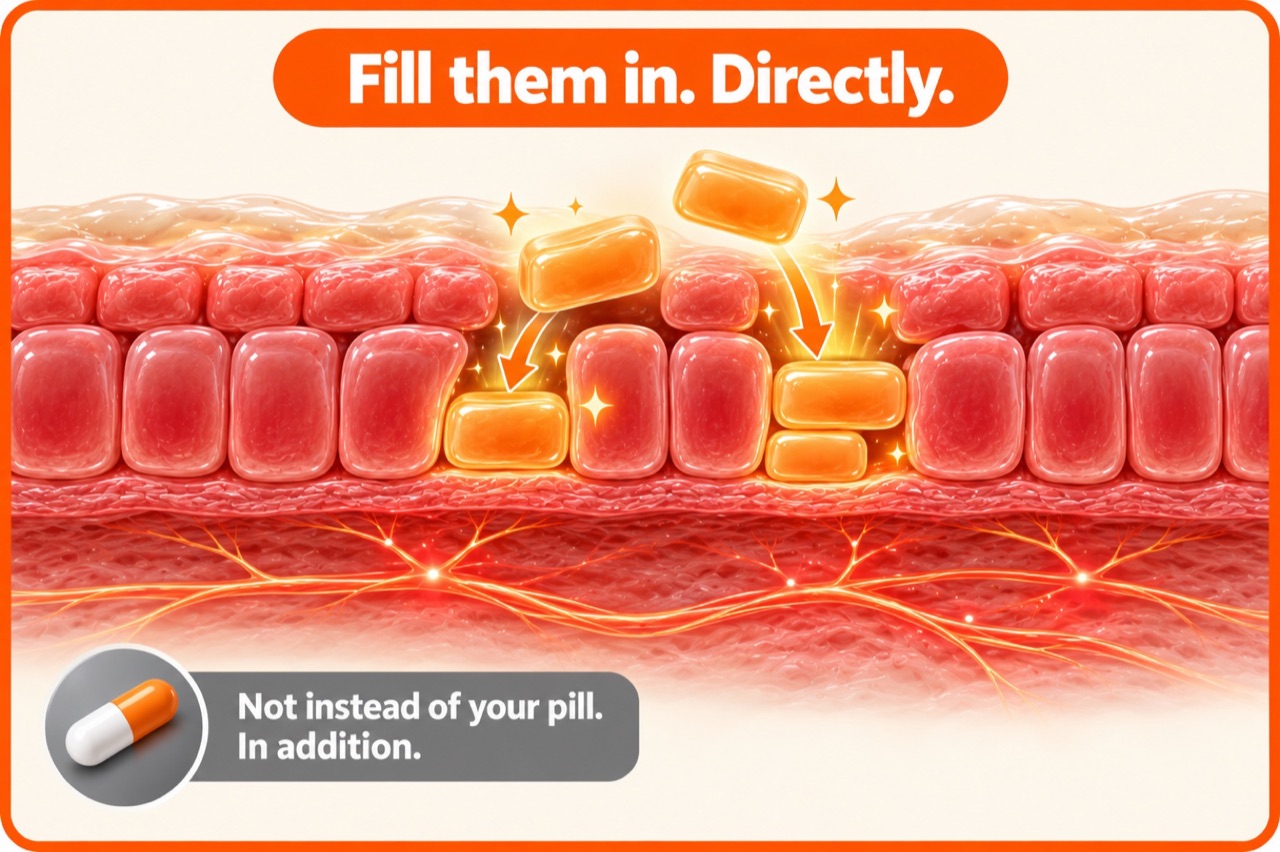
If the gaps keep opening, then fill them in. Directly.
Not instead of your pill. In addition.
Protection and repair, together.
I stood up, paced the kitchen, and could hardly breathe with excitement.
That was the answer.
After 20 years.
The solution was so simple: I just needed to fill in the gaps as well.
I only needed my doctor to get behind it.
That same night, I made another list of questions.
I printed studies.
The next morning, I called the office at 8.
I hadn’t been this euphoric in years.
I was sure of it: This is it. Finally.
Three days later, I was sitting in front of my family doctor.
I explained everything. Calmly. Factually. Like a journalist.
He listened – politely, patiently, almost compassionately.
Then he leaned back and said:
“Mr. Marsh, I understand. But that isn’t the standard of care. My job is to control your acid, and your results are good. I won’t recommend anything outside the guidelines.”
He said it kindly. But firmly.
I left the office and, from the car, called the first gastroenterologist I could find.
Waiting time: four months.
I called a second office. Three months.
A third. “We treat reflux with acid suppression.”
I spent the whole night searching again. This time not about reflux. About the healthcare system.
What I found was discouraging:
➡️ Acid suppression comes first – a daily PPI, then lifestyle changes, and for those who still don’t improve, surgery. Helping the lining repair itself isn’t part of the plan.
➡️ Doctors are trained to follow the guidelines – and the guidelines give them no step for supporting the lining.
➡️ Most doctors stay inside the guidelines – anyone who wants more ends up on their own, at their own expense.
It was midnight, and I was sitting at the kitchen table.
Slowly, I realized:
The one approach that could really help me, no doctor I could find would offer me.
Not because it was wrong. But because the system doesn’t provide for it.
I had come so close.
I had found the answer.
And I still couldn’t have it.
I cried for the first time in weeks.
Not out of anger. Out of despair.

At that moment, I was ready to give up everything.
The article. My job. My belief that things would ever get better.
Was it over, then?
It was a few days later.
That morning, I was in my kitchen washing up the breakfast dishes.
It was one of those days when I had barely dragged myself out of bed.
In the background, a podcast was playing, where several digestive health experts were discussing the latest findings.
I was half listening, half thinking about the article I still hadn’t written.
Then the name came up: Kenneth De Vault.
I put down the dish towel, turned up the volume and sat down at the kitchen table.
What the experts said next stopped me cold.
They were talking about a completely different approach I had never heard of.
An approach that could tackle the problem at its root, without a higher dose.
Without yet another prescription.
Without a private specialist at your own expense.
The approach was so simple that my brain stopped for a second:
Instead of just turning down the acid, you help the lining repair itself and fill in its own gaps.
We deal with the dilated intercellular spaces. At the root.
And one of the experts even said that, alongside your regular treatment, it’s the more natural route.
I sat there, trying to understand what I had just heard.
Suddenly everything made perfect sense:
If my lining fills in its own gaps, then I just had to give it the necessary ingredients and time to reset itself.
Then I don’t have to swallow antacids all day and pray they last until dinner.
Then there’s no rollercoaster of relief and relapse.
Then my body does what it was made to do:
It renews its own lining, day after day, exactly as much as it needs at that moment.
Steady, natural protection.
The way it’s supposed to be.
For the first time in weeks, I had hope again.
But one decisive question remained:
How exactly do you get the lining to fill in its own gaps?
That’s exactly where the sentence came that changed everything for me.
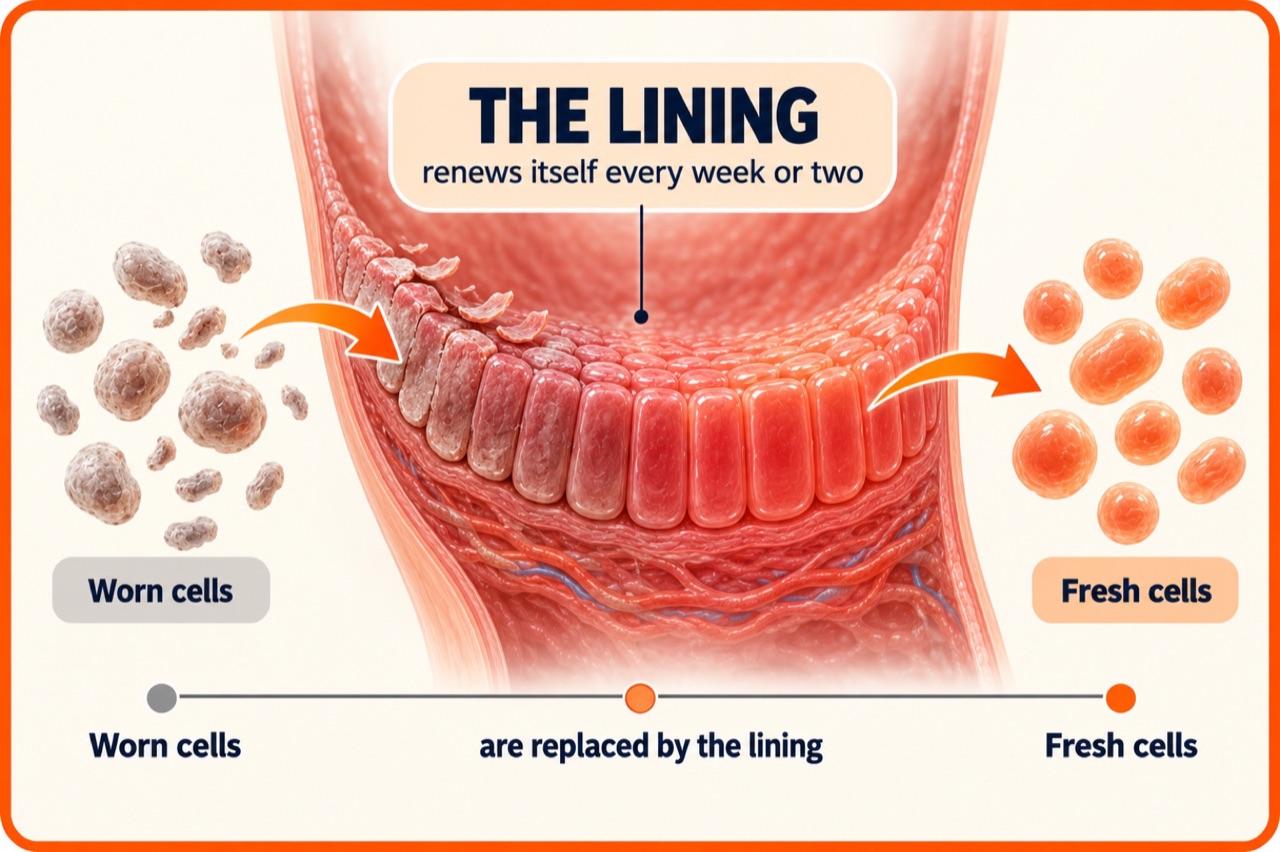
The Lining
One of the experts explained:
“The lining of your esophagus renews itself roughly every week or two. The problem is that today it is under attack faster than it can rebuild.”
I sat there. Stunned.
The lining.
Had I heard that right?
I rewound. I listened to the sentence again.
The lining of my esophagus renews itself every week or two.
The part of the body that, on the subject of reflux, absolutely no one thinks about.
And it was suddenly clear where the problem really comes from:
The lining can no longer keep up.
But why can’t the lining keep up?
Why Your Lining Is Almost Always Under Attack Today
What most people don’t know:
Your lining is the front line of your digestive tract.
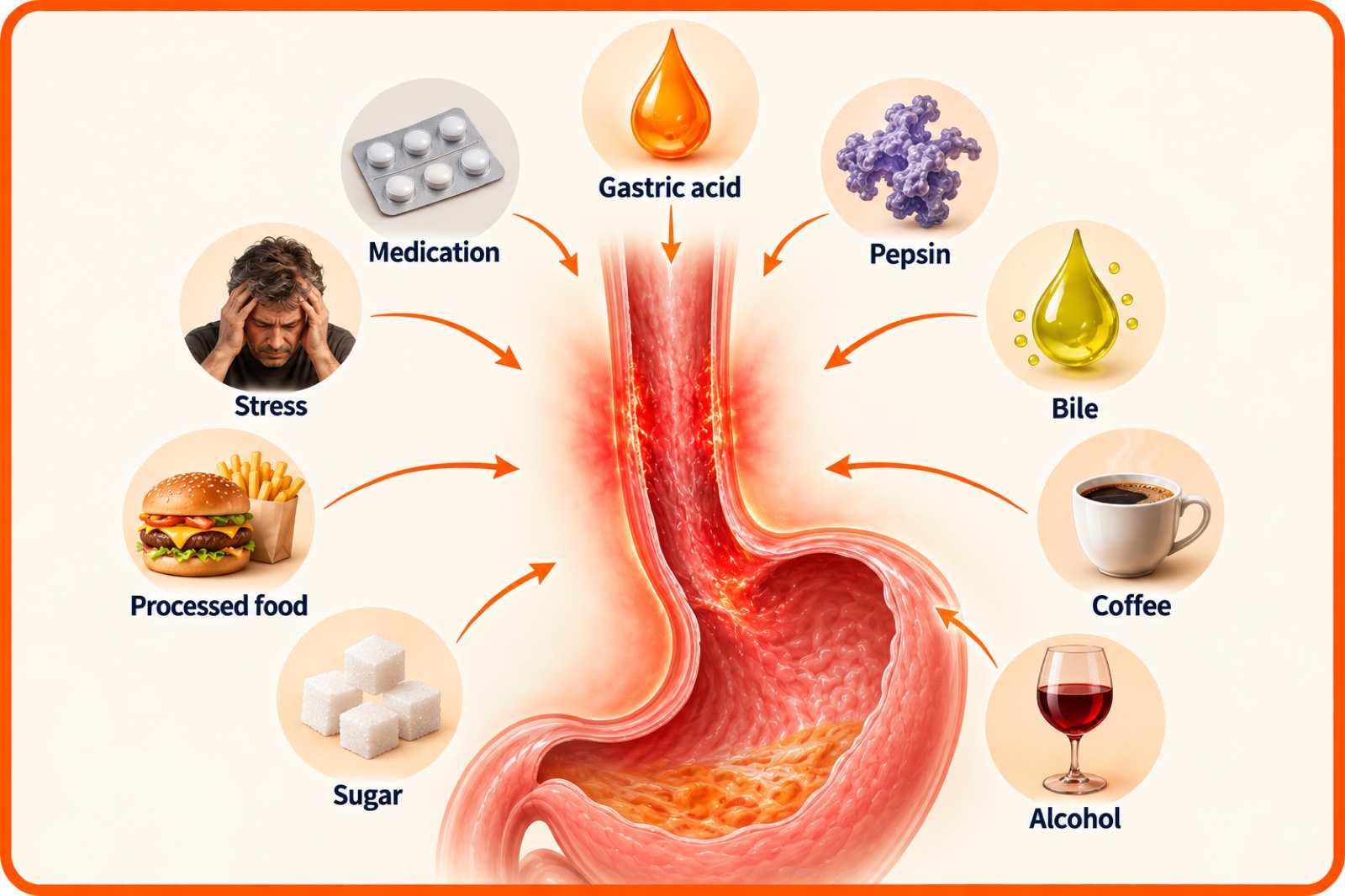
Every day, it takes the hit from whatever comes up from your stomach: gastric acid, pepsin and bile.
And on top of that: coffee, alcohol, sugar, processed food, stress, medication.
Everything that doesn’t belong lands on the desk of your lining.
And that’s exactly where the problem lies:
A hundred years ago, our grandparents’ lining faced a fraction of this load.
Today, it’s under fire every day.
And when a tissue is working at full capacity, it does what’s vital first: it defends itself.
Everything else comes second.
Including filling in the gaps.
What the research shows:
- Bile is made by your liver. Only some of it reaches your esophagus, but studies show the more that does, the more severe the damage to the lining.
- Pepsin is made in your stomach. It comes up too, and it can penetrate deep into the lining.
- And your lining needs about 11 days to renew itself. So when bile and pepsin keep coming back, the repair may never get to finish.
Suddenly, it all made sense.
A lining that is attacked every day can’t fill in its own gaps.
In me. In you. In millions of people across America.
That is exactly why our pills aren’t enough – no matter the dose.
Then another sentence from the podcast stopped me cold.
One of the experts said:
“Your esophagus can regenerate completely – if you give it the right nutrients.”
Let that digest for a moment.
All this time, I had pictured those gaps like cracks in a wall.
Once a crack opens, it only gets wider. Nothing repairs a crack on its own.
That’s why I had accepted that this was permanent.
But here is what no one had told me:
Your gut lining is one of the fastest-renewing tissues in your entire body.
Some cells in your body take decades to renew, and some never fully do.
Your esophageal lining? About 11 days.
Even after years of attacks – with the right support, it can regain its strength.
And when the lining is strong again, it finally does what it was made for:
Keeping everything away from your nerves.
Exactly like in a “healthy” person.
Exactly like it still worked for me 20 years ago.
In the podcast, the experts then explained very concretely what matters.
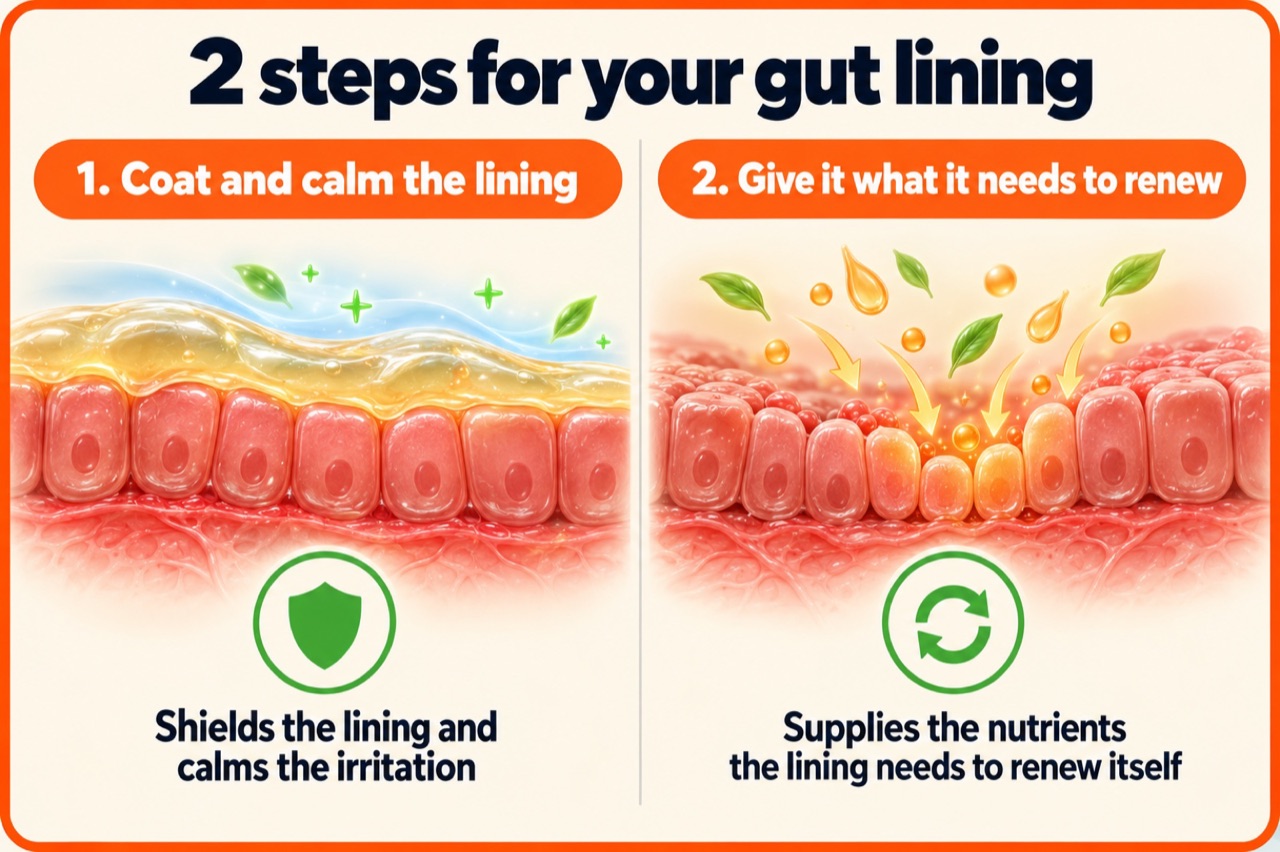
They talked about two steps that have to work together:
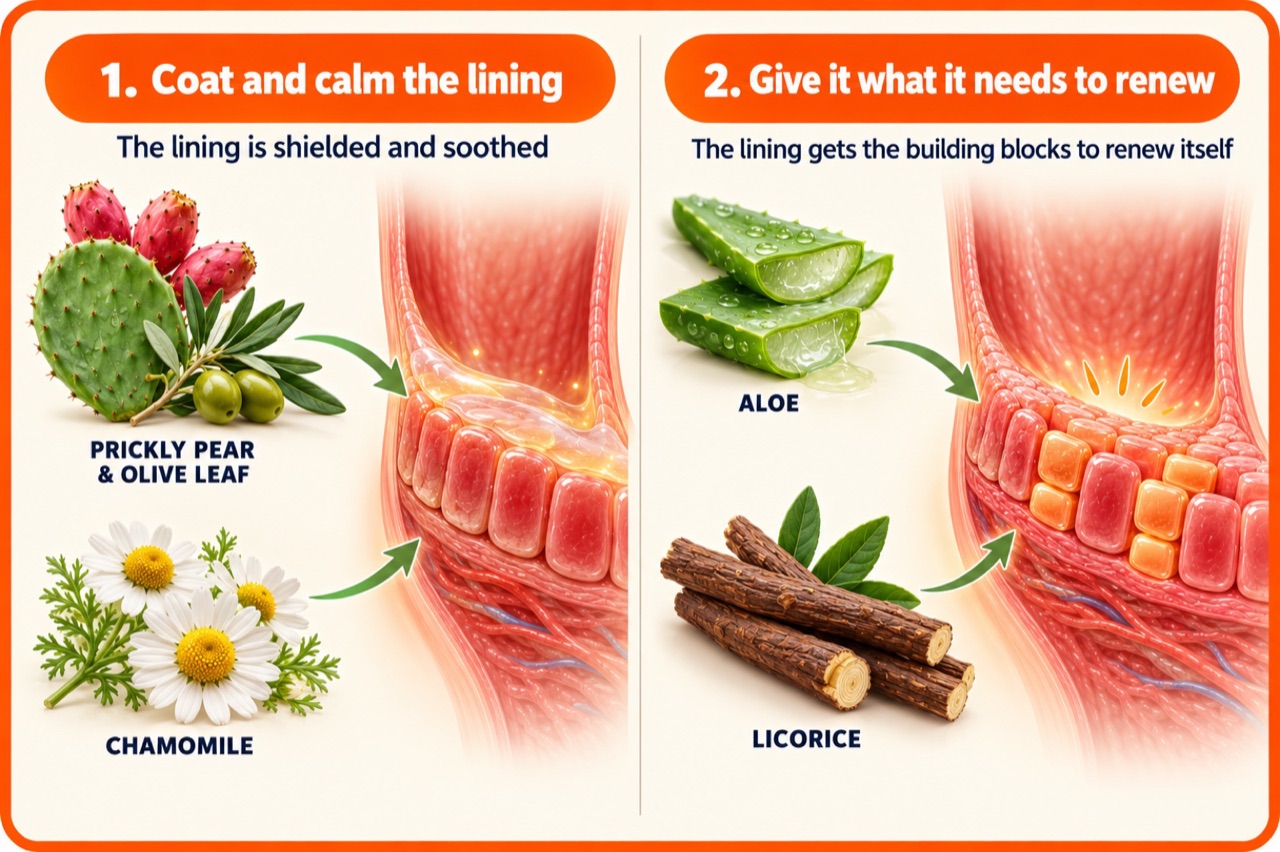
Step 1: Calm and protect the lining, so it isn’t hit every day and finally has room to renew itself.
Step 2: Give the lining the right nutrients, exactly the substances it needs to renew itself and hold together.
Two steps. No more.
If I manage these two steps, my lining recovers, the gaps fill in, and my body finally does what it’s made to do.
And that would mean:
- Finally having energy again. Finally sleeping through the night.
- Finally eating dinner without counting the hours before bed.
- Finally no more antacids in every pocket.
- Finally thicker hair again.
- Finally recognizing myself in the mirror again.
Recap so far
✅ Reflux isn’t only gastric acid. Pepsin and bile come up too
✅ Acid reducers and antacids only go after one of the three
✅ Over the years, all three wear down the seals between the cells of your lining: dilated intercellular spaces
✅ If you still have symptoms despite your pills, you may well have them
✅ The answer is then not simply a higher dose
How Do I Restart My Lining?
The podcast had given me the decisive keywords:
Lining. Renewal. Nutrients.
Now it was my turn.
That night, I opened my computer.
What I discovered over the next two weeks changed my understanding of reflux forever.
Because the evidence was already on the table – in published studies from around the world.
There were studies on how the gut lining renews itself, and on natural ingredients that support it.
And yet, in 20 years, no doctor had told me a single word about them.
The Two Steps to Treat the Dilated Intercellular Spaces
After two weeks of intense research, I finally had clarity.
The studies showed me what my body needed.
Exactly the two steps the experts in the podcast had suggested. Only now with concrete, studied ingredients.
In places I relied on footnotes (shown in parentheses) pointing to scientific studies.
Step 1: Coat and Calm the Lining
Prickly Pear & Olive Leaf
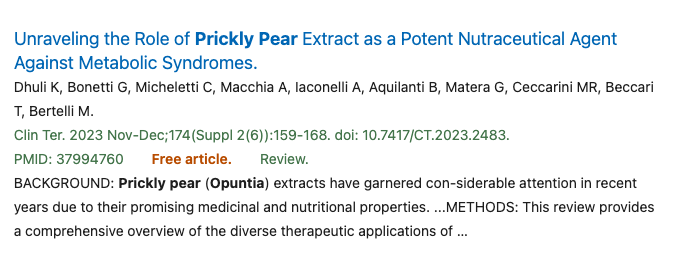
Prickly pear is a cactus whose pads contain a natural gel-forming fiber. Combined with olive leaf, it was developed for the digestive lining.
When it comes to the health of the lining, this extract is by now very well studied. What stands out most (1):
- It forms a gel-like layer that sticks to the lining. In lab tests, it stuck better than hyaluronic acid or alginate.
- That layer helps shield the lining from what comes up from your stomach.
- It helps calm the inflammation in the digestive tract.
- In a clinical trial, people taking it reported fewer digestive symptoms (2).
Chamomile Extract
Most people know chamomile as a bedtime tea.
This isn’t that.
This is a German chamomile extract, 10 times more concentrated, and clinically studied for its soothing and anti-inflammatory properties.
Think of cool water on an angry burn. The inflammation that keeps your lining from healing starts to settle.

With these two, the lining is coated and calmed. Almost like flipping a switch.
As they say: A calm gut makes for a calm person.
But as I said, that alone isn’t enough. A calm, coated lining is the foundation, but it also has to receive the right building blocks to renew itself and hold together.
And that is exactly where Step 2 comes in.
Step 2: Give the Lining What It Needs to Renew
Without the right nutrients, your lining is like an engine that’s running but has no fuel.
Two ingredients came up again and again in my research, and almost no doctor ever mentions them.
Aloe
Most people know aloe from sunburn.
And in a way, your esophagus is sunburned every single day.
But the aloe here isn’t the gel from a bottle. It’s a premium, highly bioavailable form, processed so it actually reaches where it needs to work.
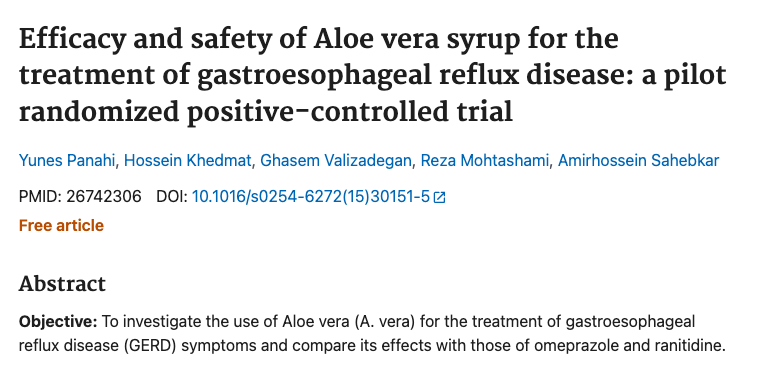
Aloe syrup has been tested on reflux patients, and it eased symptoms like heartburn and regurgitation (3).
Researchers believe it forms a soothing layer along your lining, a layer your cells can rest under while they fill in their own gaps.
Deglycyrrhizinated Licorice
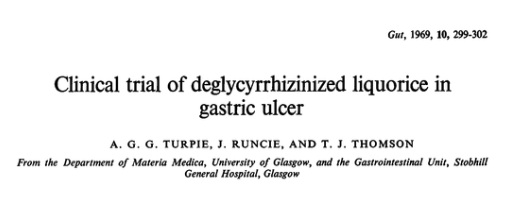
Known as DGL, it’s a purified form of licorice root made specifically for the digestive tract.
DGL has been studied for decades for digestive complaints, and it’s believed to support the lining (4).
Picture a wall getting new bricks while the burning finally stops.
And in 20 years, not one doctor mentioned it to me, even though the scientific data is clear.
My List Was Finally Complete
After two weeks of intensive research, I finally had a list in front of me:
- Prickly pear & olive leaf
- Chamomile Extract
- Aloe Syrup
- Deglycyrrhizinated Licorice
Four ingredients I would have to buy separately.
I did the math.
More than $160 a month.
That was a significant sum.
But after 20 years of suffering, I had nothing left to lose.
So I ordered everything.
Because according to the research, my lining should finally get what it needs to fill in its own gaps.
And the burning, the 2 a.m. wake-ups, the exhaustion, would finally ease.
My Self-Experiment
Before I even started taking all these supplements, I made a decision:
I wanted to see in black and white whether they really did anything.
No self-delusion.
No “I think I feel better.”
Real numbers.
So that very evening, I started a diary.
Every day, for two weeks before my first capsule, I wrote down three numbers: how many times the burning hit me, how many nights I woke up, and how many antacids I took.
Not just “how I felt.” Everything that really counts.
When I looked at the numbers, I finally had clarity.
My doctor was right: my acid was “under control”. My endoscopy was “normal”.
And that was exactly the problem.
Because the rules say: doctors treat reflux by controlling the acid and checking the endoscopy.
So my doctor did everything “by the book.” According to the rules.
The only problem is that those rules are failing.
The acid level says nothing about whether your lining is actually holding.
What really counts is what reaches your nerves: the burning, the nights, the pills you need.
And exactly those numbers were never counted in me for 20 years.
Until now.
And the result was frightening:
14 burning episodes in a week.
4 nights woken up.
Antacids every single day. And all of it with my PPI, taken exactly as prescribed.
Exactly what Kenneth De Vault had described: a “normal” endoscopy, and a burning that never stops.
Suddenly, everything made sense.
Everything the experts had said in the podcast.
Everything I had researched in two weeks.
Everything I had felt in my own body for 20 years.
I had it in front of me, in black and white:
With a PPI and antacids, every single day, I was still burning every other day.
Exactly like millions of other people.
And the craziest part:
In 20 years, no doctor ever counted these numbers.
Not one ever asked how many nights I woke up.
They all looked at the endoscopy and said:
“Everything’s fine, Mr. Marsh.”
For 20 years…
But anger doesn’t get me anywhere.
If nobody had acted for me in 20 years, I had to do it myself.
Better late than never.
I had my list.
I had my ingredients.
And for the first time in years, I had a plan again.
So I got started.
The First Days Were a Nightmare
Four different capsules. Every day.
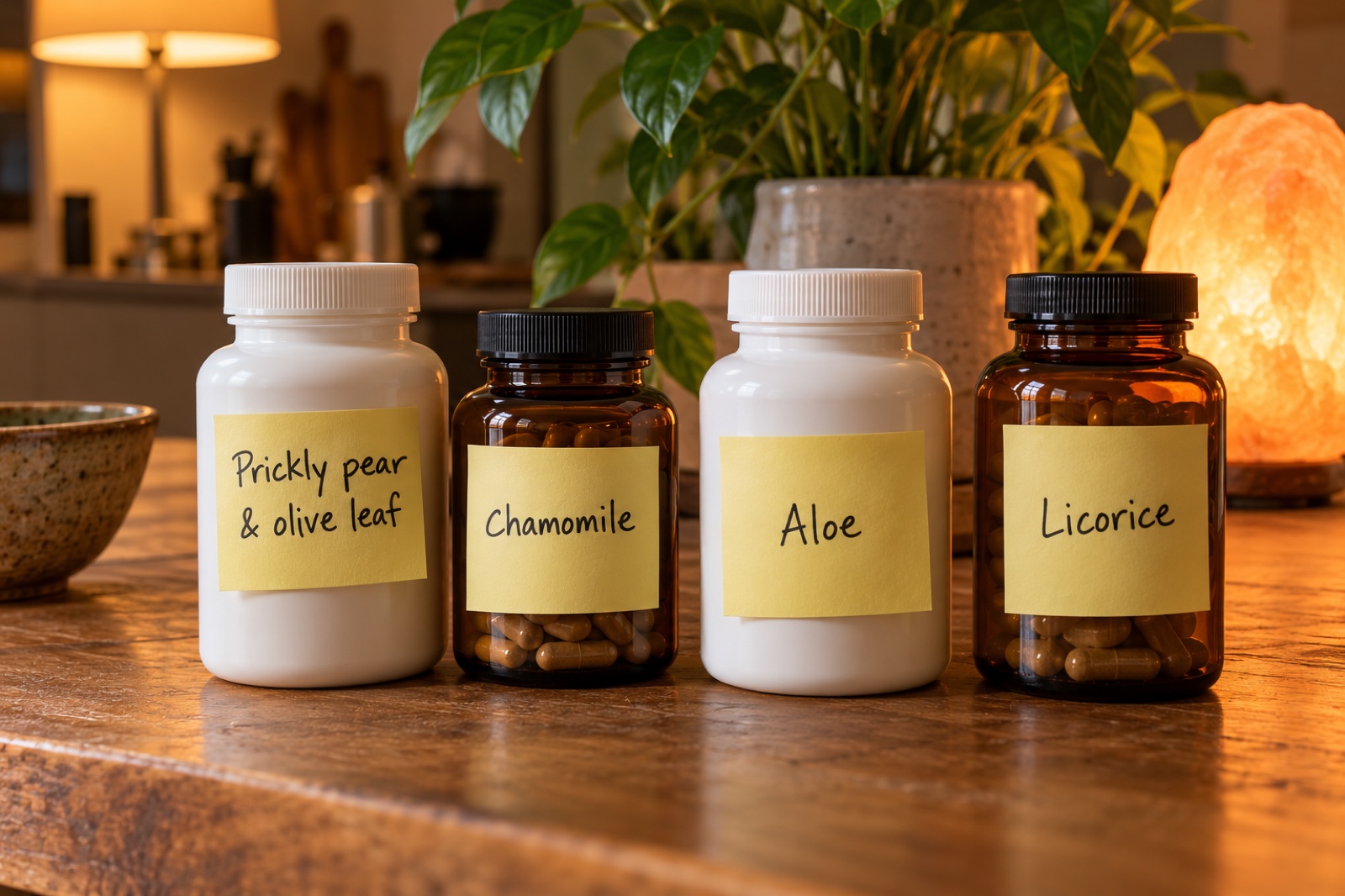
My table looked like the shelf of a small pharmacy.
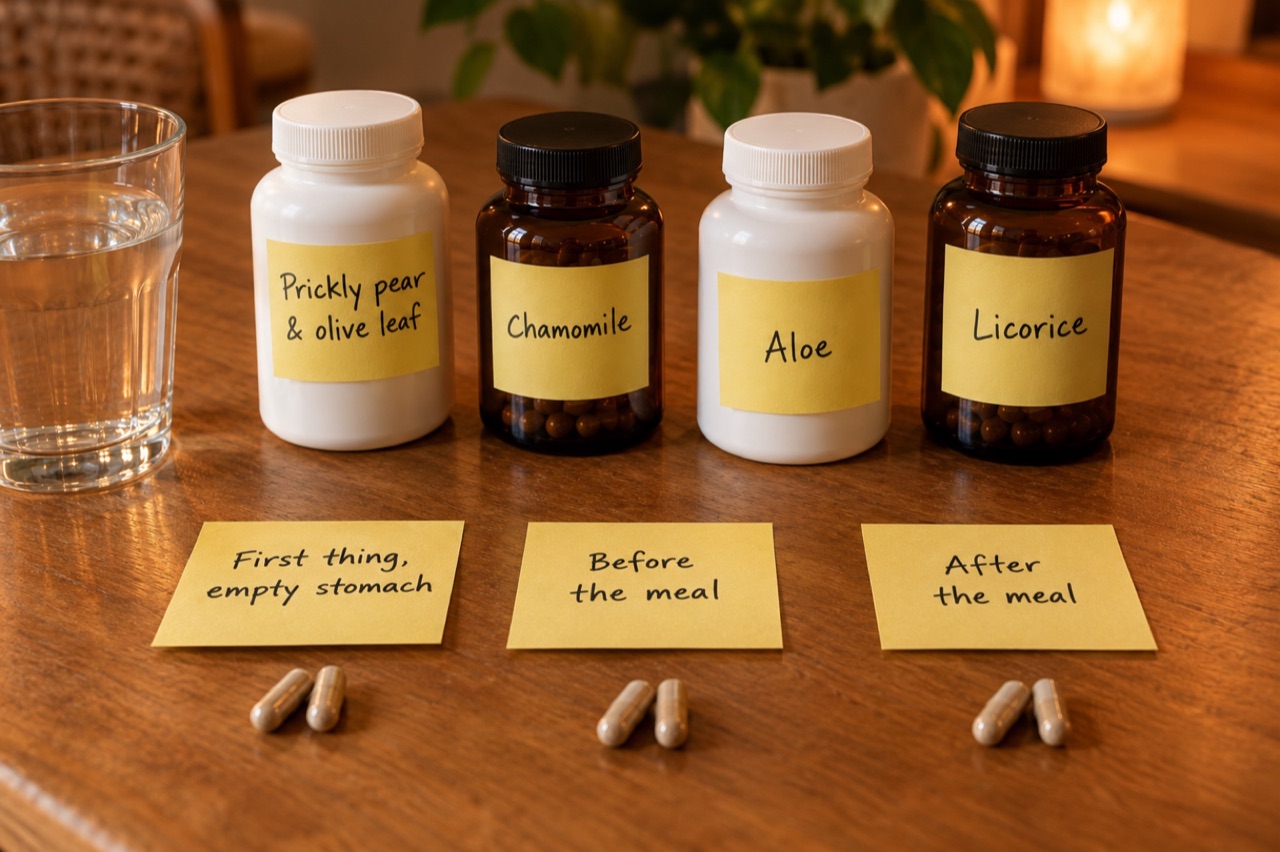
Four little bottles. Each with different instructions: one before the meal, one after, one first thing in the morning on an empty stomach.
The morning routine alone took five minutes.
My wife just looked at me and shook her head:
“You won’t last two weeks.”
But I was stubborn.
After 11 Days, Something Happened
I suddenly slept through the night.
For the first time in years, I woke up without a sour taste in my mouth. Nothing to spit out.
I just woke up. Rested.
It was so unexpected that I could hardly believe it.
My wife said at breakfast:
“You look more awake today.”
I smiled, honestly, for the first time in a long time.
After 4 Weeks, My Antacids Were Forgotten
Anyone who knows me knows: my antacids were legendary.
In my pocket. In my bag. In every drawer at work.
Every day, I counted the hours until the next dose.
After four weeks, I realized I hadn’t touched one in days.
Simply gone.
But Then Came the Problem
Even though I felt much better, my homemade mix was a nightmare every day.
Four schedules.
Four different doses to keep straight.
For some capsules, I had to remember an empty stomach. For others, with a meal.
I quickly lost track.
And so did my bank account.
$160 a month. At least.
I told myself: There has to be a better solution.
The Last Piece of the Puzzle
One evening, I was sitting in a reflux forum where people share their experiences.
And one name kept coming up: GutReset.
One man from Ohio wrote that he could finally sleep flat, without his wedge pillow.
A woman from Texas: after three months, dinner out again without counting the hours.
A third: with his doctor’s okay, he’d gone down to half his PPI dose.
I was skeptical.
After everything I’d lived through in 20 years, I distrusted every new “miracle cure.”
But as a journalist, I was also curious.
So I did my research.

GutReset is built around one problem only:
Acid reflux.
The name alone made me curious.
Not “block.” Not “neutralize.”
Reset.
Who names a product that, unless they’ve truly understood what the problem is?
I looked at the ingredients.
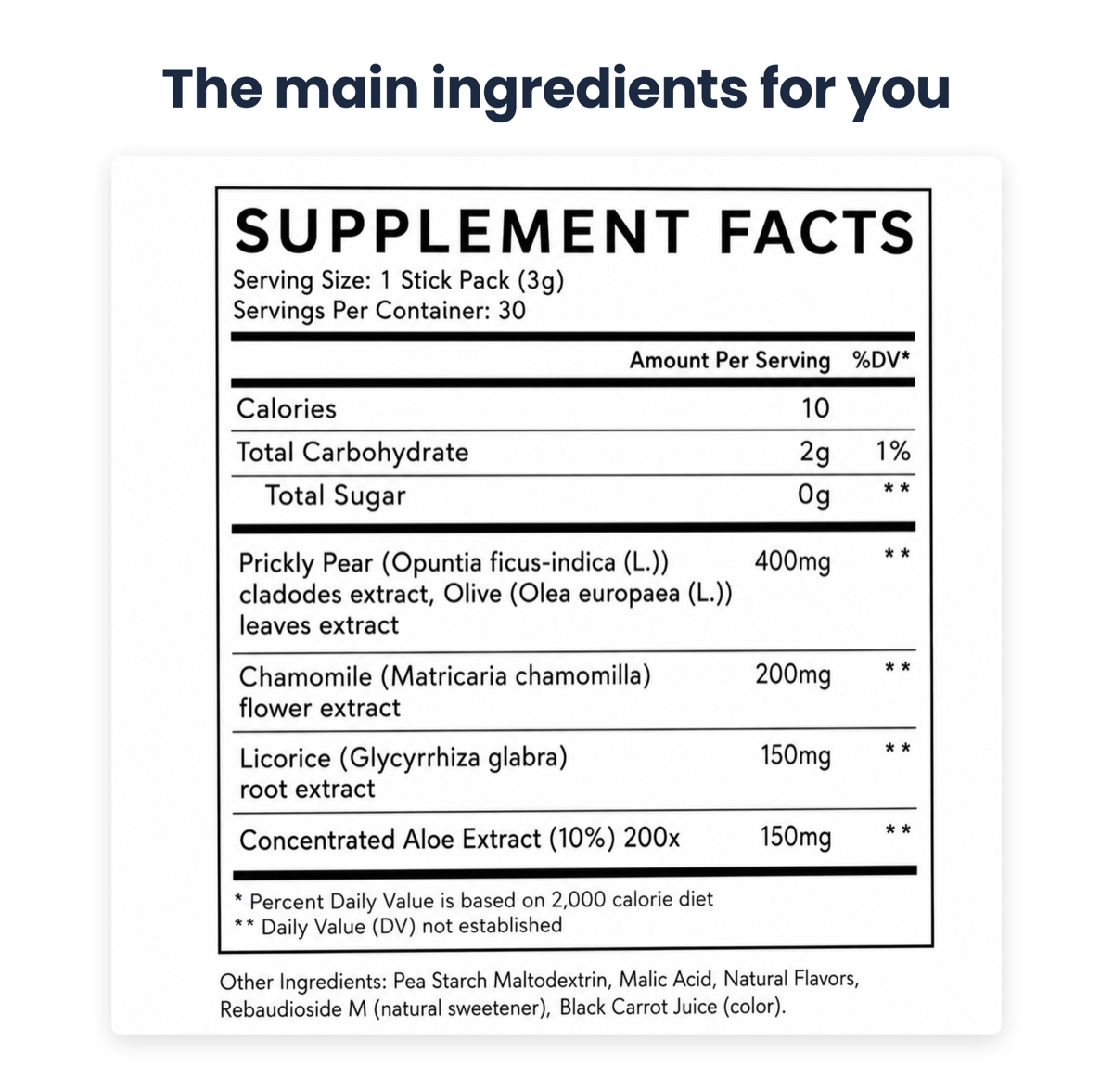
All four of my ingredients were in GutReset.
It was exactly my own mix, except I didn’t have to put it together myself.
And in forms I would never have found on my own.
And the price?
In a pack of three: only about $1.44 a day.
Let that sink in.
For my four separate bottles, I’d paid more than $160 a month.
GutReset cost around $43 a month in the pack of three.
Less than a takeaway coffee a day!
I ordered a pack of three that same evening and decided to continue my self-experiment from the second month with GutReset.
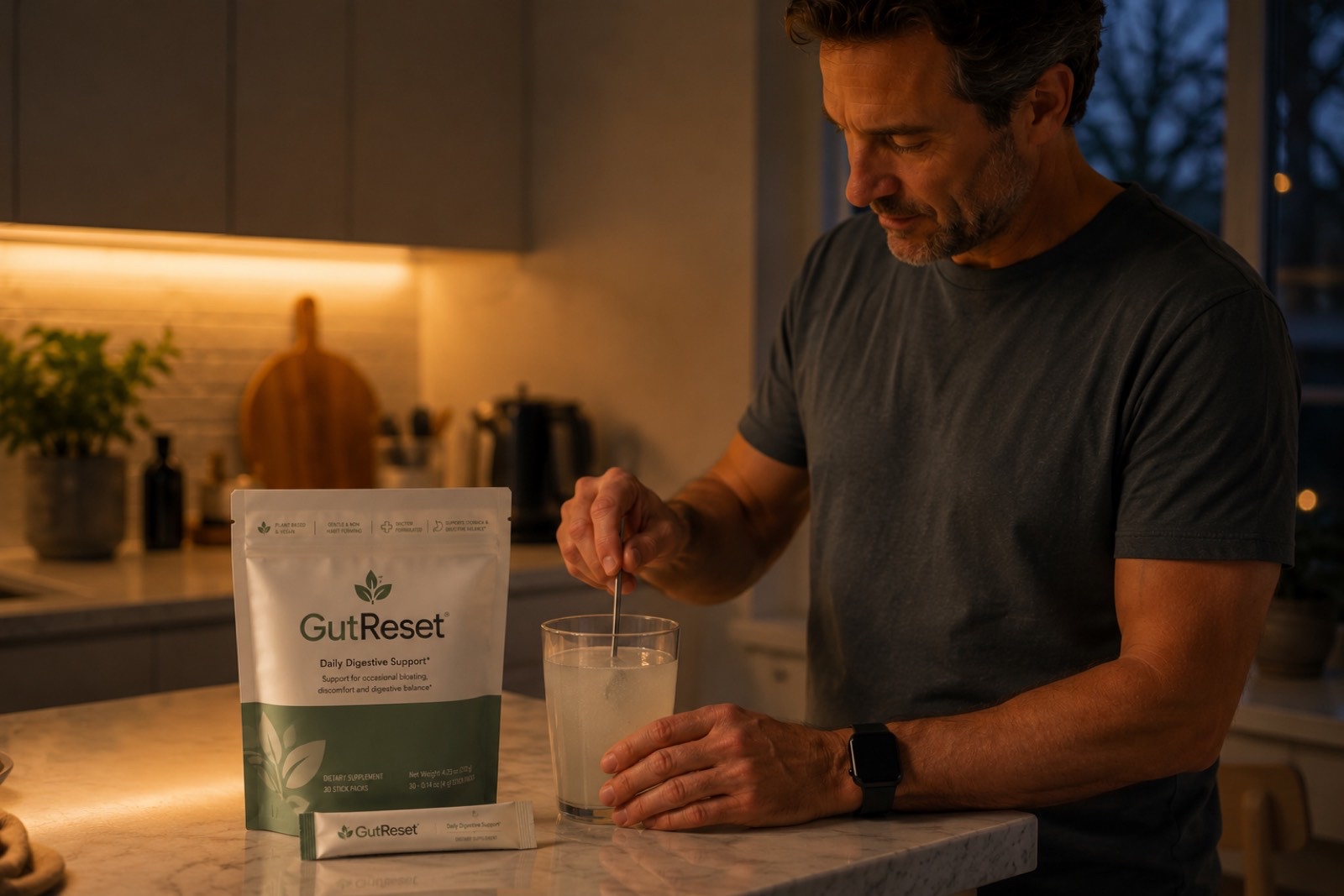
Instead of four bottles, I now only had to take one stick pack a day, before my biggest meal.
But does it really work?
After 8 Weeks
I could hardly believe it myself.
Burning episodes: down from 14 a week to 3.
Nights woken up: from 4 to 0.
Antacids: none.
That Saturday, my wife and I went to our favorite Italian restaurant.
Tomato sauce. A glass of red wine. Dessert.
For the first time in years, I didn’t count the hours until bedtime.
My wife looked at me across the table and said:
“You’re glowing.”
They were little things.
But after 20 years, those little things were EVERYTHING to me.
After 3 Months, My Diary Again
My three boxes were empty. I picked up my diary and counted again.
This time, with my heart pounding.
Would the numbers confirm what I felt every day?
I laid the two pages side by side, before and after.
Burning episodes: from 14 a week to 1.
Nights woken up: from 4 to 0.
Antacids: from every single day to none.
I sat in my car in the parking lot and cried.
But this time, not from despair.
This time, from relief.
My Life Today
I sleep flat on my back. No wedge pillow.
My colleagues bring it up at work:
“David, what are you doing differently? You look great.”
I can concentrate until the evening again.
No afternoon crash.
No brain fog.
I sleep through the night.
Every night.
Without an alarm, I’m awake at seven in the morning.
And the best part:
I no longer lie awake next to my wife, burning.
She puts her hand on mine on the sofa.
I kiss her goodnight, and I sleep.
After 20 years, I finally recognize myself in the mirror again.
My Research Became the Biggest Article of My Career
I wrote the story. Exactly as I’ve told it here.
My editor was stunned.
The feature hit like a bomb.
Instead of being laid off, I was promoted.
In the weeks after publication, I received hundreds of letters and emails from readers sharing their own stories.
These letters touched me deeply.
And that’s why I’m writing this second article you’re reading today.
Because I know what you’re going through.
I know what it’s like to wake up every day already dreading the burn.
To plan your whole life around what you can eat.
To lie awake at night and feel like a stranger in your own body.
I know what it’s like when doctor after doctor tells you:
“Your acid is under control.”
And I know what it feels like when you finally feel like yourself again.
That’s exactly where I’d like to help you.
One More Thing You Need to Know
Before I give you my last piece of advice, I have to be clear about one thing:
I’m a journalist, not a salesman.
I’m writing about this because I believe in the method, and because it helped me.
I wrote this article for one person:
You.
But I understand if you’re skeptical.
Honestly, in your place, I’d be skeptical too.
After all those expensive supplements that did nothing.
After doctors who didn’t listen.
That’s exactly why there’s a 100-day money-back guarantee.
No ifs or buts.
If GutReset works for you, you get your life back.
If it doesn’t, you get every dollar back.
So you have nothing to lose.
A Special Offer for My Readers
Because this offer is limited, the pack of three currently costs only about $1.44 a day.
Less than a takeaway coffee.
A way to get your life back, for the price of a cappuccino.
My Personal Advice to Finish
If you wake up every morning with that sour taste in your mouth…
If you eat less and less and the burning still finds you…
If you spend your nights propped up on pillows…
If for years you’ve gone from doctor to doctor and nothing really helps…
Then you need to understand something important now:
Nobody will help you if you don’t start yourself.
No doctor.
No partner.
No miracle.
Only you.
You have two options now.
Option 1:
You carry on as before.
You keep going to doctors who tell you your acid is under control.
Who follow a rulebook that is out of date.
Who prescribe you, year after year, a higher dose of your PPI.
And you accept that you feel a little worse month after month.
In the worst case, the untreated damage can lead to complications: ulcers in the esophagus, a narrowing that makes swallowing difficult, or other, more serious digestive problems.
And the acid blockers themselves, taken for years, have been linked to problems of their own: a higher risk of broken bones, anemia and nerve damage from low vitamin B12, heart rhythm problems from low magnesium, and serious gut infections.
Because a lining under attack every day can keep wearing down, year after year.
Option 2:
You take responsibility.
For your body.
For your life.
For the person you used to be.
You try an approach that gave me my life back, and that has helped hundreds of other readers.
An approach that doesn’t fight your body, but helps your lining finally do again what it was made for.
The path you take, you alone decide.
But please remember:
You only have this one life.
And you deserve to feel good in it again.
Warmly,
David Marsh
A reminder: GutReset has sold out repeatedly in recent months. I can’t promise it’s still available today.
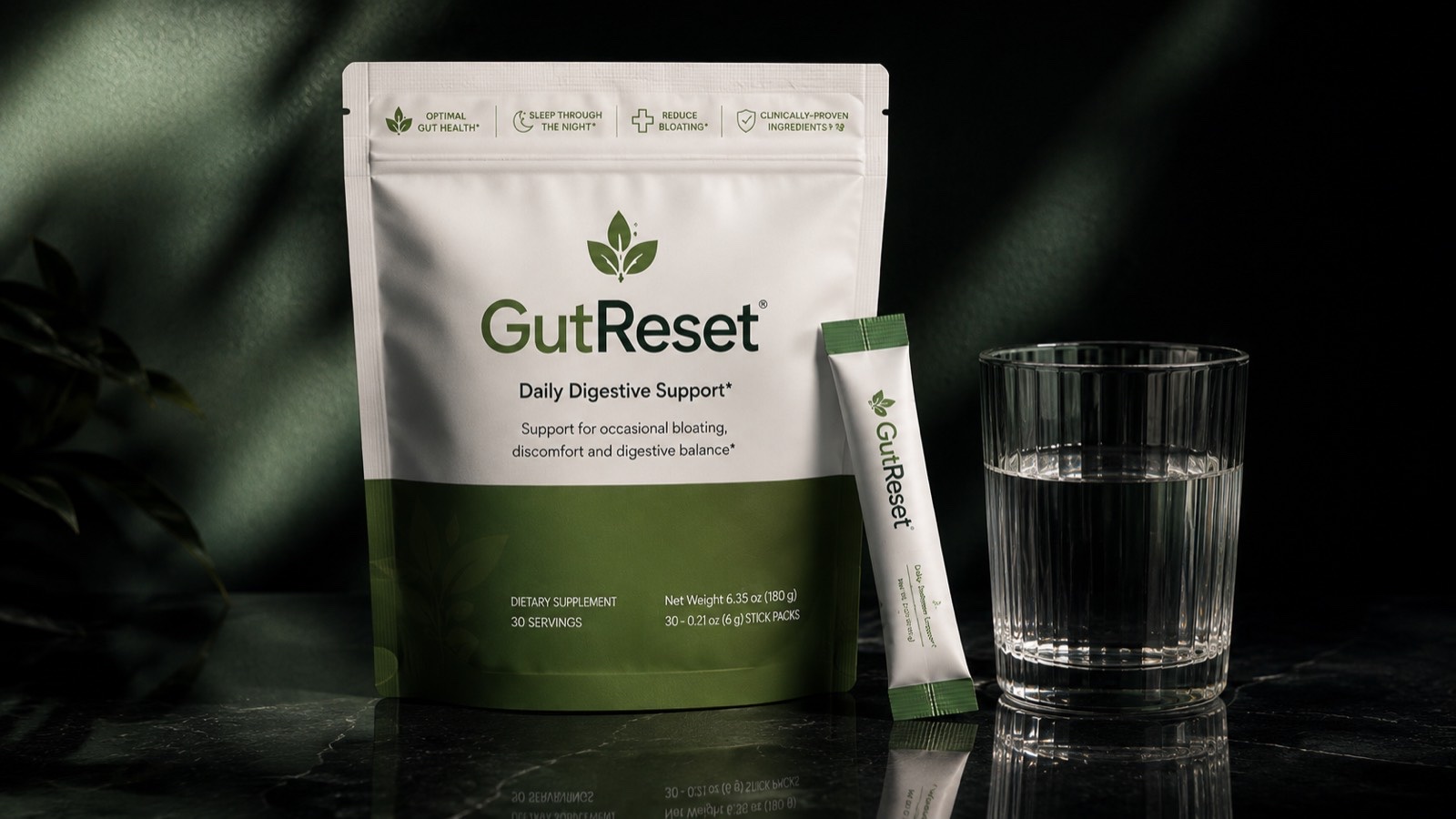
Simply click the button and check GutReset’s availability
What I like about GutReset:
1) It works where pills reach their limits: on the lining, not just the acid
2) Made in the USA and regularly tested in a lab
3) It has four ingredients, in concentrated forms, so I don’t need other supplements
4) The effect showed in my own numbers
What I like less:
1) Insurance doesn’t cover it.
2) It’s only available online, and not (yet) in my pharmacy
3) It isn’t the cheapest, but you save a lot with the pack of three. Either way, you should give the whole thing a fair 3 months.
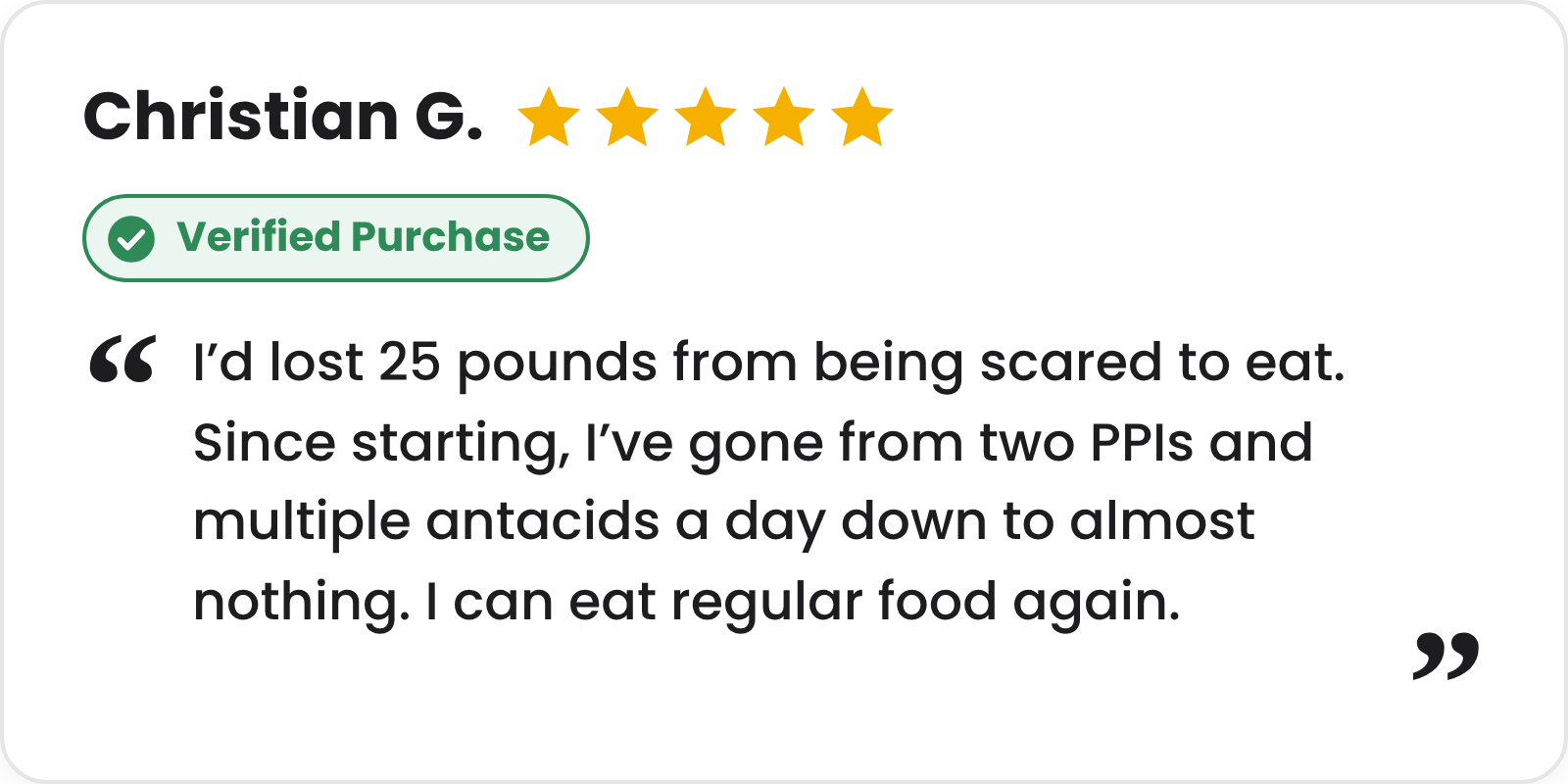
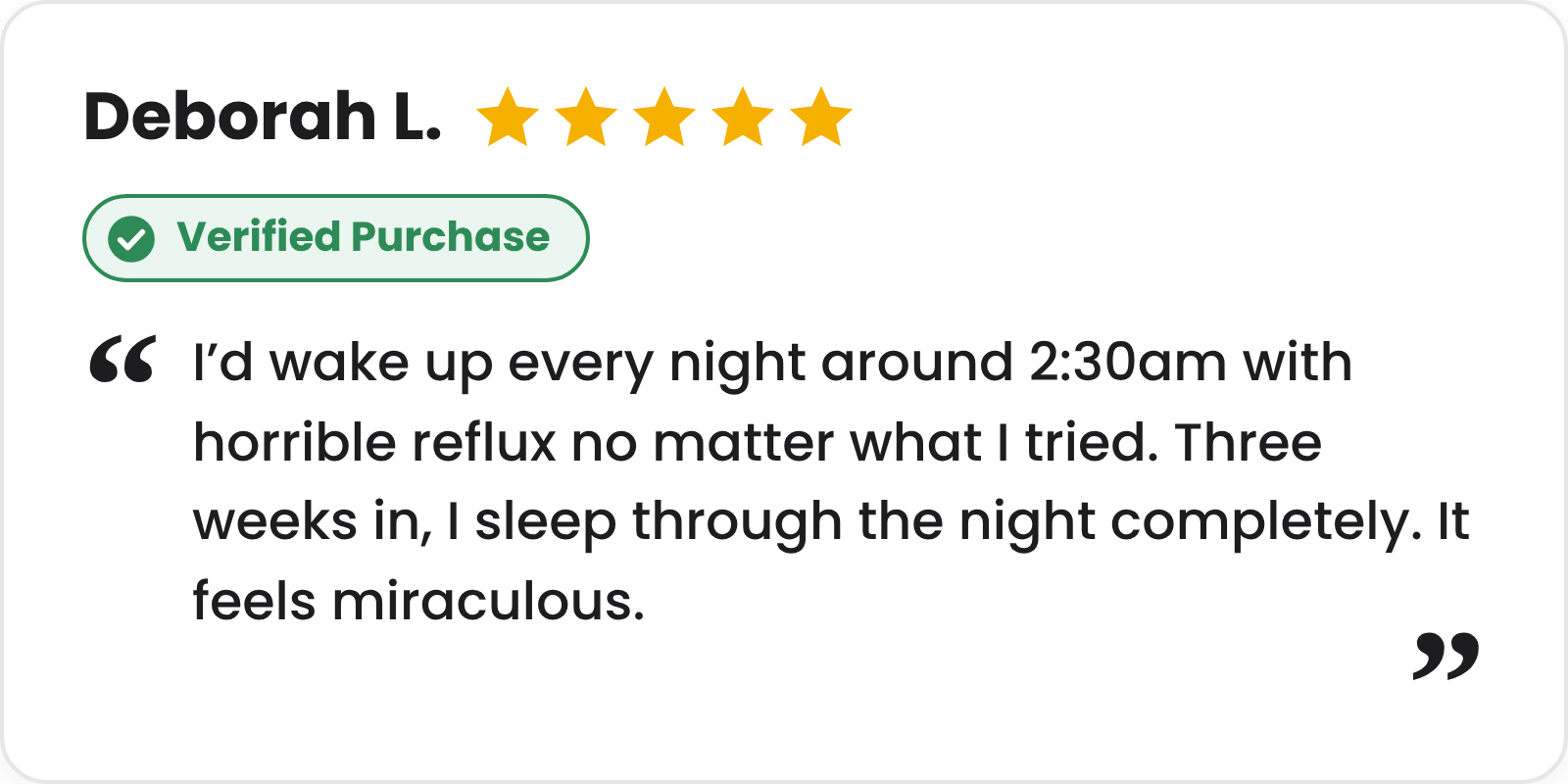
Verified Reviews
Here are a few more reviews of GutReset that I found for you:
P.S.:
Since I published this article, many of you have asked me questions. So I wanted to briefly answer the most important ones:
Antacids neutralize acid temporarily — then your body overproduces acid to compensate, so you need more, more often. PPIs suppress up to 90% of your acid production, which sounds like a solution until you try to stop and the rebound hits harder than your original symptoms. GutReset is formulated to target the four root causes of acid reflux. No acid suppression. No rebound. No dependency loop.
Most people notice initial improvements within the first month. Meaningful symptom reduction typically happens by month 3. Optimal results occur between months 3 and 6. Real gut restoration takes time.
Four research-backed ingredients, each targeting a specific root cause. The dose matters because most supplement companies use similar ingredients at amounts too small to have any real effect. Every ingredient in GutReset is included at the therapeutic dose used in the clinical studies behind it.
We offer a 100-day money-back guarantee. That said, GutReset requires consistency and time to work. If you try it for three days and don’t feel like a different person, that’s not a failure — that’s how gut restoration actually works.
Most natural reflux supplements target one thing and leave the rest untouched. GutReset addresses all four root causes simultaneously, at the clinical doses used in actual research.
Each of GutReset’s four core ingredients has been studied in clinical trials. Every study is public.
Yes — and you should. Space GutReset at least 2 hours apart from any prescription medications. If you’re pregnant, nursing, or have a diagnosed condition, check with your doctor before starting.
About the Writer
David Marsh is 54 and has worked for over 30 years as a journalist for American magazines and newspapers. For 20 years, he suffered from acid reflux himself, and searched in vain for a real solution. Only through his own research and the book of the renowned gastroenterologist Kenneth De Vault did it finally click. He dove into the subject for months and is glad to have finally found the perfect solution for himself. He has been able to reduce his symptoms to a minimum, and today feels as vital and full of energy as he did in his 30s.
Sources (original studies):
(1) MUCOSAVE® FG product brochure, Bionap (manufacturer data, in vitro; not peer-reviewed).
(2) Malfa GA, Di Giacomo C, Cardia L, Sorbara EE, Mannucci C, Calapai G. “A standardized extract of Opuntia ficus-indica (L.) Mill and Olea europaea L. improves gastrointestinal discomfort: a double-blinded randomized-controlled study.” Phytotherapy Research. 2021. doi:10.1002/ptr.7074
(3) Panahi Y, Khedmat H, Valizadegan G, Mohtashami R, Sahebkar A. “Efficacy and safety of Aloe vera syrup for the treatment of gastroesophageal reflux disease: a pilot randomized positive-controlled trial.” Journal of Traditional Chinese Medicine. 2015;35(6):632-636.
(4) Turpie AG, Runcie J, Thomson TJ. “Clinical trial of deglycyrrhizinated liquorice in gastric ulcer.” Gut. 1969;10(4):299-302. gut.bmj.com/content/10/4/299